Unleashing the Magic of Dragon Initials: A Guide to Mythical Typography
In the vast world of digital design, typography often serves as the silent narrator of a story before a single word is read. While standard sans-serifs and clean serifs play the role of the reliable supporting cast, there are times when a project demands a leading actor with undeniable presence. Enter Dragon Initials, a specialized illustrated display font that bridges the gap between ancient mythology and modern graphic design. This isn't just a typeface; it is a collection of digital art pieces designed to anchor your creative work with strength, elegance, and a touch of fantasy.
For designers, authors, and business owners looking to evoke a sense of history, power, or whimsy, understanding how to effectively utilize a font like Dragon Initials can transform a flat layout into a dynamic visual experience. This guide explores the anatomy of this font, its ideal applications, and how to wield its power effectively in your next project.
The Anatomy of a Dragon: Features and Characteristics
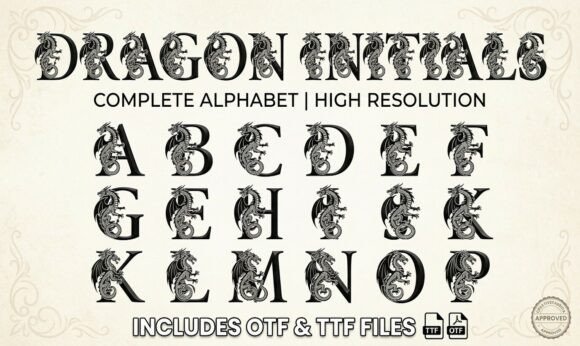
To appreciate the value of Dragon Initials, one must look closely at the craftsmanship behind each glyph. Unlike traditional fonts where letters are constructed from strokes and curves, Dragon Initials relies on illustration. Every single capital letter in this set is a canvas where a fierce, beautifully drawn mythical dragon is intertwined with a classic, bold serif structure.
The design philosophy behind this font is rooted in high detail. The dragons are not merely clip-art pasted onto a letter; they are woven into the architecture of the typography. You might see a tail wrapping around the spine of a 'P' or wings spreading across the crossbar of a 'T'. This integration ensures that the letter remains legible while offering a massive visual impact.
Key characteristics include:
- Illustrative Detail: The artwork features scales, textures, and shading that suggest a hand-drawn or engraved quality, reminiscent of vintage bookplates or medieval manuscripts.
- Bold Serif Foundation: The underlying letter structure is a classic, heavy serif. This ensures that despite the decorative elements, the letter maintains a recognizable shape necessary for reading.
- Decorative Focus: As a display font, Dragon Initials is designed for large sizes. The intricate details would be lost if the font were reduced to body text sizes.
Purpose and Practical Application
The primary purpose of Dragon Initials is to act as a focal point. In design theory, a focal point draws the viewer's eye to the most important part of the page. Because these letters are visually complex and distinct, they naturally command attention, making them ideal for starting a narrative or establishing a theme instantly.
1. Editorial Design and Book Publishing
The most traditional use for ornate initials is in book publishing, specifically in the fantasy and mythology genres. Dragon Initials is perfect for creating the drop cap—the large initial letter at the start of a book chapter.
Imagine opening a high-fantasy novel. The first page of a new chapter features a massive letter "A". Instead of a standard black letter, it is a detailed illustration of a dragon curled protectively around the letter, breathing fire. This immediately immerses the reader in the world of the story. It sets a tone of adventure and mysticism before the narrative even begins.
2. Branding and Monograms
For businesses and professionals, a monogram is a powerful branding tool. A logo using Dragon Initials can convey specific brand values. It suggests that a brand is protective of its clients, powerful, creative, or steeped in tradition.
This is particularly useful for:
- Game Studios: Logo marks for indie role-playing games (RPGs) or board game developers.
- Breweries and Distilleries: Craft beverage brands often utilize vintage, rugged typography. A dragon initial can add a layer of artisanal heritage.
- Personal Brands: Artists, tattoo parlors, or authors who want a distinct signature look.
3. Digital and Web Design
In the digital realm, attention spans are short. Using Dragon Initials for headers on a website can break the monotony of standard web fonts. It works exceptionally well for "About Us" pages, author bios, or landing pages for fantasy-themed events. When used as a web font for a specific heading, it can increase the time a user spends on the page simply because the visual is intriguing enough to pause for.
Evaluating Suitability: Strengths and Considerations
While Dragon Initials is a stunning tool, it is not a universal solution. Like any specialized instrument, it must be used in the right context to be effective.
The Strengths
The primary strength of this font is its visual storytelling capability. You do not need to add extra graphics or illustrations when using this font; the letter itself is the art. This can streamline the design process for headers or chapter starts. Furthermore, the "classic bold serif" foundation ensures that the letters are structurally sound and recognizable, preventing the design from becoming illegible chaos.
Considerations and Limitations
The main limitation of Dragon Initials is its complexity. Because the letters are highly detailed illustrations, they generally function best as single capital letters (monograms or drop caps). Attempting to write an entire word or sentence in this font would likely result in a cluttered, unreadable mess.
Additionally, because the style is so specific to fantasy and mythology, it may clash with modern, minimalist, or corporate design aesthetics. Using a dragon initial on a banking website, for example, might confuse the audience rather than engage them.
Strategies for Pairing and Usage
To truly unleash the magic of Dragon Initials, it must be paired with the right companion fonts. Because the initials are bold, ornate, and heavy, the supporting text should provide contrast.
The Rule of Contrast: Never pair a decorative display font with another decorative font. If you use Dragon Initials for your drop cap or header, the body text should be clean and legible.
- Pair with Serifs: For a classic, literary feel (think Tolkien-esque), pair the dragon initials with a readable serif font like Garamond, Baskerville, or Times New Roman. This creates a cohesive "old world" aesthetic.
- Pair with Sans-Serifs: For a more modern contrast—perhaps for a video game menu or a movie poster—pair the initials with a clean sans-serif like Helvetica, Open Sans, or Roboto. This makes the ornate letter pop even more against a clean background.
Real-World Scenarios: Who Benefits?
The versatility of Dragon Initials extends to various creative professionals. Here is a breakdown of who benefits most from this resource:
- Self-Publishing Authors: Writers in the urban fantasy, epic fantasy, or historical fiction genres can use these initials to professionalize their book interiors, giving their self-published work the feel of a big-budget publishing house.
- Graphic Designers: Designers looking for unique assets for posters, flyers, or social media headers can use these letters to create instant "stop the scroll" content.
- Event Planners: For themed events, such as medieval fairs, cosplay conventions, or themed weddings, using these initials on invitations and place cards adds a layer of immersive detail.
- Content Creators: YouTubers or streamers focusing on lore, history, or gaming can use the font for video thumbnails or channel logos to signal their content niche instantly.
Conclusion
Typography is more than just legibility; it is about personality. Dragon Initials offers a specific personality that is fierce, beautiful, and steeped in legend. By understanding its features—such as the intertwining serpentine forms and bold letter structures—and applying it to the right contexts, creators can add a layer of depth and professionalism to their work.
Whether you are typesetting a novel, designing a logo for a new game, or creating a monogram for a personal brand, Dragon Initials provides a tool that is both functional and artistic. It reminds us that in the world of design, the first letter often sets the stage for the entire story. By choosing a font that carries the weight of mythology, you ensure that your message is not just read, but felt.