Make Things: The Font Duo That Actually Works Together
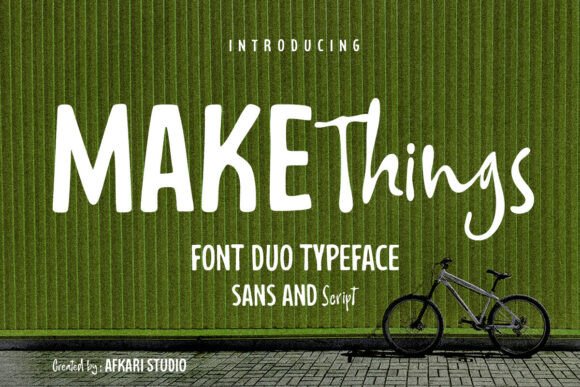
You know the feeling. You’re staring at a blank canvas, trying to pair fonts for a new project. You spend an hour scrolling through your library, dropping in a serif, then a sans, then a script, constantly second-guessing whether they actually look good together or if you’re just forcing it. It’s a time-suck, and it rarely feels effortless. That’s the exact problem Make Things was designed to solve. It’s not just a collection of fonts; it’s a pre-built typographic system that gives you the contrast and harmony you’re looking for, right out of the box.
Beyond the Wedding Invitation: Where Make Things Truly Shines
Sure, a font duo with a script component can feel destined for wedding invitations and boutique logos. And Make Things handles those beautifully. But its real power lies in its versatility for modern, everyday design challenges where you need to inject personality without sacrificing clarity. Think about the brands and content you engage with daily. The most compelling ones often use this exact principle: a clean, trustworthy foundation paired with a human, expressive accent.
For the Solo Entrepreneur Building a Brand
Let’s say you’re a life coach, a consultant, or a freelance photographer. Your brand needs to feel both professional and deeply personal. Using the Make Things sans serif for your body copy—on your website, in your email newsletters, on your service packages—creates that clean, credible, and highly readable foundation. It says, “I’m organized and serious about my work.” Then, you use the Make Things script font for your call-to-action buttons (“Let’s Chat”), for pull quotes in your blog posts, or for your personal signature in your email footer. This is where the magic happens. The script adds that necessary warmth, that human touch that builds connection. It visually communicates, “I’m approachable, creative, and here for you.” You’re not just a service; you’re a person.
Crafting Social Media That Stops the Scroll
In the endless scroll of social media, static images need to work hard. A feed that’s all one font style can become monotonous. This is a prime scenario for using Make Things to create immediate visual hierarchy and interest. Imagine an Instagram carousel post for a bakery. The first slide might use the Make Things sans in bold caps for the headline: “OUR NEW SOURDOUGH.” It’s clean, strong, and clear. The next slide, revealing the recipe story, could use the script font for a quote from the baker, adding a layer of artisanal authenticity. For a fitness coach, the sans font can list the workout steps, while the script highlights a motivational mantra. This mix-and-match capability allows you to create a dynamic, branded content series that feels cohesive yet varied, keeping your audience engaged.
Designing Marketing Materials with Real Impact
Think beyond digital. Consider the tangible touchpoints of a business. A local coffee shop’s new menu board. A real estate agent’s “Just Sold” postcard. A non-profit’s annual report. In all these cases, Make Things provides a practical solution. The sans serif is perfect for listing menu items, property details, or statistics—it’s functional and easy to scan. The script font then elevates the key message. On the menu, it can highlight the “Barista’s Special.” On the postcard, it can write out the neighborhood name with flair. In the report, it can set apart a powerful testimonial from a beneficiary. This duo approach makes information digestible while adding a layer of design sophistication that elevates the entire piece from ordinary to memorable.
Practical Considerations Before You Dive In
While Make Things is incredibly versatile, a thoughtful approach will always yield better results. The script font, with its flowing, handwritten nature, is an accent, not a workhorse. Its strength is in short bursts—headlines, subheads, logos, and callouts. Using it for long paragraphs would be a readability nightmare. The sans serif is your reliable workhorse for all the heavy lifting of body text.
Consider your project’s primary context. Is it a formal annual report for a law firm? The script might be best reserved for a single, powerful quote or a section divider. Is it a brand identity for a yoga studio? You might use the script more liberally for class names and inspirational messages. The key is to test the pairing in your specific layout. Does the contrast feel balanced, or does one element overpower the other? Does the script’s personality align with the brand’s voice? Sometimes, the most effective use is subtle—a single scripted word in a sea of clean sans serif can be the detail that catches the eye.
Who Benefits Most from This Approach?
The beauty of a well-designed font duo like Make Things is that it democratizes good typography. You don’t need to be a seasoned graphic designer to achieve a polished, professional result.
- Small Business Owners & Startups: It offers an affordable way to establish a cohesive and professional brand identity across all materials without hiring a designer for every asset.
- Content Creators & Social Media Managers: It provides a toolkit for creating visually engaging and varied content quickly, helping to maintain a consistent and attractive feed.
- Event Planners & Stationery Designers: It simplifies the process of creating elegant and harmonious suites of materials, from save-the-dates to day-of signage.
- Bloggers & Newsletter Writers: It helps break up long-form text, highlight key points, and add personality to digital content, improving reader engagement.
Ultimately, Make Things is about removing a common creative roadblock. It’s a practical tool for anyone who needs to communicate a message that is both clear and compelling, both professional and personal. By providing a balanced, ready-made pairing, it lets you focus less on the technical struggle of font selection and more on the creative act of making things that connect with your audience.