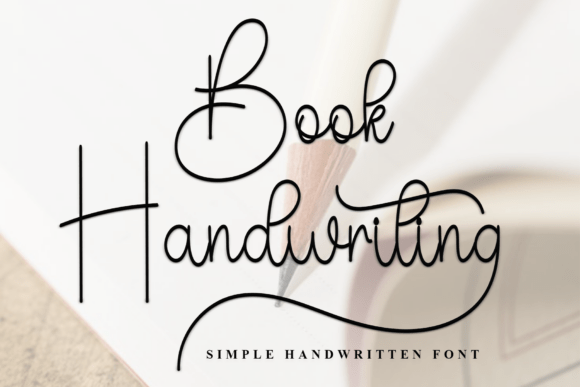
Book Handwriting: The Font That Feels Like a Friendly Note
In a digital world saturated with sleek, impersonal typefaces, there's a growing desire for designs that feel human. We crave warmth, personality, and a touch of the personal in our communications. This is precisely where Book Handwriting shines. It’s more than just a collection of letters; it’s a digital embodiment of a friendly, handwritten note, designed to bridge the gap between cold digital text and genuine human connection.
So, what exactly is Book Handwriting? At its core, it is a casual and creative typeface that exudes an unmistakable sense of warmth and friendliness. Its defining characteristics are its round, playful strokes and a relaxed, approachable feel. Unlike formal calligraphy or rigid print fonts, Book Handwriting doesn't take itself too seriously. It’s the font equivalent of a smiley face doodled in the margin of a notebook—charming, unpretentious, and instantly engaging. This hand-drawn aesthetic is its greatest asset, offering a fun and unique touch that can transform the entire mood of a design project.
Understanding the Anatomy of a Friendly Font
The magic of Book Handwriting lies in its specific design choices. The rounded terminals—the ends of the letter strokes—are a key feature. Sharp, angular terminals can feel aggressive or formal, while the soft, rounded edges of Book Handwriting create a sense of safety and approachability. The letterforms themselves have a gentle, organic flow, mimicking the natural variations one would see in actual handwriting. This isn't a perfectly uniform font; its slight irregularities are what give it life and authenticity.
Furthermore, the font is equipped with standard PUA Encoded glyphs. While this sounds technical, its practical benefit is straightforward: it ensures that Book Handwriting works seamlessly across a vast array of design software. Whether you are a professional working in Adobe Illustrator or Photoshop, a business owner creating materials in Canva, or a hobbyist using Corel, you can access and use the font without compatibility issues. This universality is crucial, making it a reliable tool for creators at any skill level.
Where Does Book Handwriting Belong? Practical Applications
The true value of a font is measured by its application. Book Handwriting is not a one-size-fits-all solution for every project, but in the right context, it is incredibly powerful. Its casual nature makes it ideal for projects where personal connection and a lighthearted tone are paramount.
For Personal Projects and Celebrations
This is where Book Handwriting truly excels. Imagine designing invitations for a birthday party, a baby shower, or a casual get-together. The font instantly sets a friendly, celebratory tone, telling guests the event will be relaxed and fun. It's also perfect for creating personalized greeting cards, scrapbooking elements, or photo album titles. The hand-drawn quality makes these personal keepsakes feel even more special and heartfelt.
For Social Media and Digital Content
In the fast-scrolling world of social media, grabbing attention with a human touch is vital. Book Handwriting is an excellent choice for social media graphics. Use it for quotes on Instagram, friendly announcements on Facebook, or engaging text overlays on TikTok videos. It cuts through the noise of standard fonts, making your content feel more personal and relatable. It works wonderfully for creators, bloggers, and influencers who want to build a brand voice that is approachable and authentic. It can also be used for casual blog headers or call-to-action buttons on a personal website to soften the user experience.
For Business with a Personal Touch
While not suitable for a corporate annual report, Book Handwriting has a place in business. Small businesses, especially those in creative or lifestyle sectors, can use it to build a friendly brand identity. Think of a local bakery using it for its menu, a boutique for its shopping bag design, or an Etsy seller for their logo and thank-you notes. It communicates that there are real, passionate people behind the brand, fostering customer loyalty and a sense of community. It’s about choosing warmth over corporate stiffness.
A Balanced Perspective: Strengths and Considerations
No font is perfect for every situation. To use Book Handwriting effectively, it's important to understand both its strengths and its limitations.
The Unmistakable Strengths
- Warmth and Personality: Its primary strength is its ability to inject instant friendliness into a design.
- High Readability (at size): For headlines, titles, and short bursts of text, its clear, rounded letterforms are very easy to read.
- Versatility in Casual Contexts: It adapts well to various lighthearted projects, from print to digital.
- Software Compatibility: Thanks to PUA encoding, it’s a hassle-free choice for users of all major design platforms.
Practical Considerations and Limitations
The most important consideration is context. Using Book Handwriting for legal documents, medical information, or a formal business proposal would be inappropriate and undermine credibility. Its casual nature is a feature, not a bug, but it must be matched to the right audience and message.
Another key point is readability in long-form text. While perfect for a headline, setting an entire blog post or a lengthy paragraph in Book Handwriting would likely cause eye strain for the reader. For body copy, it's always best to pair it with a clean, highly legible sans-serif or serif font. Use Book Handwriting for emphasis, not for the main text.
Finally, overuse can dilute its impact. If every element on a page is in a playful, handwritten font, the design can become chaotic and lose its intended charm. The best practice is to use it strategically as an accent font to draw attention to key elements.
Is Book Handwriting the Right Choice for Your Project?
Evaluating a font's suitability is a crucial step in any design process. Ask yourself these questions to determine if Book Handwriting is a good fit:
- What is the tone of my project? If the answer is "friendly," "playful," "personal," "casual," or "inviting," you're on the right track. If it's "serious," "authoritative," "corporate," or "elegant," you should likely look elsewhere.
- Who is my audience? Book Handwriting resonates well with a general consumer audience, families, and younger demographics. It may be less effective for audiences expecting formal or highly technical communication.
- How will it be used? Is it for a short, impactful headline, or for a 500-word paragraph? Prioritize it for display use (titles, headers, logos) and pair it with a simpler font for body text.
- Does it align with my brand identity? For a business, consistency is key. Ensure the font's personality matches the overall brand voice you want to project.
Ultimately, Book Handwriting is a valuable tool in a designer's or creator's arsenal. It’s a deliberate choice to prioritize human connection over sterile perfection. By understanding its characteristics, strengths, and ideal use cases, you can harness its charming, hand-drawn aesthetic to create designs that don't just communicate a message, but also make people feel welcome and understood. It’s a small detail that can make a world of difference in how your work is perceived.