Dinsum: Integrating a Bold Handwritten Marker Font into Your Creative Workflow
In the landscape of digital design, typography is not merely about selecting a typeface; it is a critical execution phase where brand personality is finalized. When a project calls for authenticity and a tactile feel, the transition from concept to visual asset requires a font that bridges the gap between digital precision and human imperfection. Dinsum serves this specific function as a bold handwritten marker font. It is designed to inject a playful, authentic, and handmade style into projects ranging from professional branding to personal merchandise. Understanding where and how to implement a font like Dinsum within your broader design workflow ensures that the final output is both visually impactful and strategically sound.
The Strategic Role of Typography in Brand Identity
Before diving into the specific attributes of Dinsum, it is essential to understand where typography fits in the decision-making process. For entrepreneurs and creators, the choice of typeface is a strategic decision that influences how a message is perceived. A serif font implies tradition and authority, while a clean sans-serif suggests modernity and efficiency. However, when the goal is to convey warmth, approachability, and creativity, a handwritten style becomes the optimal choice.
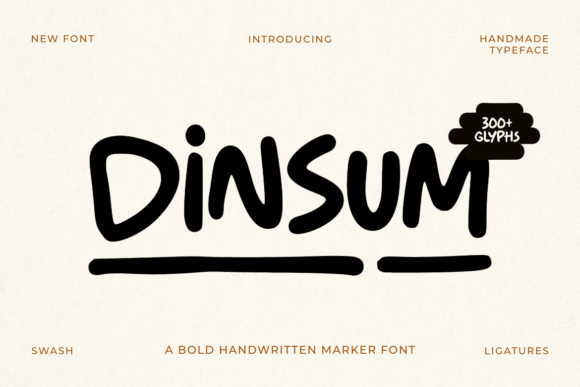
Dinsum fits into the "Expressive" category of your asset library. It is characterized by thick, smooth strokes and natural curves that mimic the pressure and flow of a real marker. This stylistic choice is vital for projects targeting audiences who value authenticity over corporate rigidity. By utilizing Dinsum, you are not just choosing a font; you are adopting a visual voice that speaks to a younger, trend-conscious demographic, or perhaps a nostalgic, retro audience, depending on the supporting graphics.
Analyzing the Asset: Features and Functionalities
Effective implementation requires a thorough understanding of the tool's capabilities. Dinsum is not a standard script font; it is engineered with specific features that facilitate professional design work. The font includes stylish ligatures and creative swashes. In a practical workflow, these features allow designers to avoid the "digital" look where letters simply sit next to each other. Instead, ligatures enable letters to connect fluidly, mimicking actual handwriting. This is crucial for maintaining the illusion of a hand-lettered logo or headline.
Furthermore, the font boasts over 300 glyphs and multilingual support. From an operational standpoint, this expands the font's utility across different market segments. If you are a publisher or a small business owner expanding into international markets, you do not need to find a secondary font to accommodate different character sets. Dinsum provides a consistent visual identity across various languages, streamlining the localization process of your packaging or digital content.
Integration into Specific Creative Workflows
The utility of Dinsum varies depending on the stage of the project and the medium of delivery. Below is a breakdown of how this font integrates into common professional workflows.
1. Branding and Logo Design
In the initial phases of branding, the logo acts as the anchor. Using Dinsum for a logo requires a process of customization. Because the font has such a distinct personality, two companies using the same font might look too similar. The implementation tip here is to use Dinsum as a base, but utilize the swashes to alter the entry and exit points of the word. For example, extending the tail of a "y" or the cross of a "t" can create a unique lockup. This ensures that while the font provides the "handmade" style, the final logo remains distinct.
2. Packaging and Merchandise
For product-based businesses, packaging is often the first physical touchpoint. Dinsum is particularly effective for artisanal goods, café branding, or children’s products. The bold marker look ensures legibility on physical items, which is a common pitfall with thinner script fonts. When preparing files for print, it is important to outline the fonts in your vector software to prevent rendering issues at the printer. The "friendly and approachable" vibe of Dinsum reduces the psychological distance between the brand and the consumer, making the product feel handmade even if it is mass-produced.
3. Digital Content and Social Media
For marketers, bloggers, and YouTubers, the workflow is often fast-paced. Dinsum works beautifully for YouTube thumbnails, Instagram stories, and social media posts. In this context, the font is used to create immediate visual hierarchy. The thick strokes of Dinsum make it an excellent candidate for headlines and call-to-actions (CTAs). A practical workflow involves pairing Dinsum with a clean, neutral sans-serif font for body text. This contrast ensures readability while allowing the headline to capture the "fun and modern personality" required to stop a user from scrolling.
Technical Implementation and Pairing Strategies
Integrating a font like Dinsum into a broader design system requires attention to compatibility and contrast. Because Dinsum is a display font with high visual weight, using it for long-form paragraphs would result in visual fatigue for the reader. Therefore, its role is strictly for headers, titles, and accents.
Workflow Tip: When setting up your design files (whether in Adobe Illustrator, Photoshop, Canva, or Figma), establish a type hierarchy early in the process. Assign Dinsum to Level 1 headers. Select a secondary font—such as a geometric sans-serif like Montserrat or a simple serif like Lora—for body copy. This pairing strategy ensures that the design feels cohesive. The "bold marker look" of Dinsum provides the visual impact, while the secondary font provides the structure and readability necessary for longer text blocks.
Additionally, consider the color palette. Handwritten fonts like Dinsum often perform best when contrasted against solid, flat backgrounds or textured backgrounds that mimic paper or concrete. Avoid placing this font over busy, high-contrast photographs without a solid color overlay, as the "natural curves" and swashes can get lost in the noise, reducing the overall quality control of the design.
Long-Term Use and Asset Management
For freelancers and agencies, managing a library of assets is a key part of the workflow. Since Dinsum includes extensive multilingual support and a large glyph set, it is a high-value asset that can be repurposed across multiple client types.
However, long-term use requires organization. It is advisable to create "style guides" for clients or personal projects that utilize Dinsum. Documenting which swashes are used, the specific kerning (spacing) settings, and the approved color pairings ensures consistency across future campaigns. Whether you are designing stickers, merchandise, or digital ads six months from now, having these parameters defined prevents "design drift" and maintains brand integrity.
Conclusion: Elevating the Creative Process
Dinsum is more than just a collection of vector curves; it is a functional tool for designers, creators, and branding specialists seeking to convey a specific emotional tone. Its value lies in its ability to bridge the gap between digital creation and the tactile feel of hand-lettering. By understanding its technical features—such as ligatures and glyph support—and integrating it thoughtfully into a broader typographic hierarchy, professionals can leverage Dinsum to produce work that is expressive, trendy, and memorable. Whether applied to a café menu, a YouTube thumbnail, or a startup logo, Dinsum offers a robust solution for adding a human touch to modern design projects.