Wholestory: Integrating a Handwritten Font into Your Design Workflow
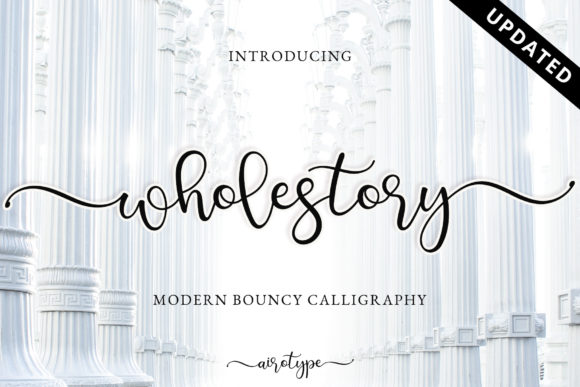
In the world of digital design and professional correspondence, the choice of typography is rarely a superficial decision. It is a strategic component of communication. While sans-serifs convey efficiency and serifs suggest tradition, handwritten fonts occupy a specific, powerful niche: they evoke personality, warmth, and a human touch. Wholestory is a font designed to bridge the gap between the casual nature of handwriting and the strict requirements of professional design. It is not merely a collection of letters; it is a comprehensive tool for adding charm and elegance to visual narratives.
For professionals ranging from wedding planners to corporate marketers, the challenge is often finding a script font that does not look amateurish or illegible. Wholestory addresses this by offering a design that feels equally charming and elegant. This balance is crucial for users who need to maintain a professional standard while breaking away from rigid, standard system fonts. Whether you are a freelancer drafting a logo or a small business owner creating a thank-you card, understanding how to implement this asset effectively is the first step toward a polished final product.
The Role of Typography in Project Planning
Before diving into the specific features of Wholestory, it is helpful to understand where a handwritten font fits within a broader creative process. Typography should be selected during the initial planning and mood-boarding phase, not as an afterthought. When you are defining the visual identity of a project—be it a wedding invitation suite or a new business brand kit—the font sets the emotional tone.
For example, if a designer is working on a branding project for a boutique bakery, the goal is likely to communicate artisanal quality and personal care. Using a standard geometric sans-serif might make the brand feel cold or industrial. Conversely, an overly complex script might sacrifice readability. Wholestory fits into this decision-making process as a middle-ground solution. It offers the organic feel of a handwritten note while maintaining the structural integrity required for logos and headers. By identifying this need early, creators can ensure that all subsequent design elements align with the typography.
Technical Integration and Usability
One of the most significant barriers to using script fonts in professional workflows is technical accessibility. Many decorative fonts require third-party software to access special characters, which disrupts the creative flow. Wholestory is designed to eliminate this friction through PUA encoding.
PUA (Private Use Areas) encoding means that every glyph, swash, and alternate character is accessible regardless of the software environment. For the end-user, this translates to compatibility and efficiency. Whether you are working in Adobe Illustrator, Photoshop, or a simpler platform like Canva or PicMonkey, you can access the full character set without hunting through complex glyph panels. This ease of use is particularly valuable for entrepreneurs and small business owners who may not have extensive technical training but require professional results. The font adapts to the user's workflow, rather than forcing the user to adapt to technical limitations.
Practical Implementation in Design Assets
The utility of Wholestory extends across a wide array of design assets. Its varying baseline and smooth lines allow it to mimic the natural flow of human handwriting, making it ideal for specific applications where authenticity is key.
Stationery and Event Design
In the context of wedding invitations and event stationery, the font serves as the primary voice of the host. The "stunning alternates" feature of Wholestory is particularly useful here. By swapping out standard letters for stylistic alternatives, designers can avoid repetitive shapes that make digital text look artificial. For instance, in a word like "Wedding," using two different versions of the letter 'd' can create a rhythm that looks genuinely hand-lettered. This attention to detail elevates the perceived value of the invitation, signaling to guests that the event has been thoughtfully curated.
Business Branding and Marketing
For freelancers and marketers, consistency is vital. When using Wholestory for logos or business cards, it is important to lock in the specific alternates used so that the branding remains recognizable across all platforms. The font’s elegance makes it suitable for high-end product packaging or social media quotes, where visual appeal drives engagement. However, workflow integration requires discipline. If you select a specific swash for a logo, save that character code or style setting in your brand guidelines document. This ensures that anyone else working on the brand—such as a virtual assistant or a printer—can replicate the design accurately.
Optimizing Workflow and Quality Control
Integrating a new font into your toolkit requires a period of adjustment and quality control. While Wholestory is designed for smooth implementation, the varying baseline—a feature that mimics natural writing—requires careful kerning and spacing adjustments.
When placing the text over images or within tight layouts, such as on a business card, you must monitor the "ascenders" and "descenders" (the tall letters like 'h' and the tail letters like 'y'). Because the font features a dynamic baseline, these elements may extend further than they would in a standard block font. A practical workflow tip is to always leave ample padding around text blocks using this font. This prevents the text from feeling cramped and allows the "smooth lines" to breathe, maintaining the elegant aesthetic.
Furthermore, consider the hierarchy of information. Wholestory excels as a display font for headlines, quotes, and names. It is generally less effective for long-form body copy, where readability at small sizes is paramount. A successful workflow pairs this font with a clean, neutral sans-serif for body text. For example, a marketing brochure might use Wholestory for the main hook and a font like Lato or Roboto for the details. This pairing ensures that the design captures attention while remaining easy to read.
Long-Term Use and Versatility
The true value of a font asset is determined by its versatility over time. Because Wholestory is described as looking stunning on everything from greeting cards to logos, it becomes a long-term asset in a designer’s library. It is not a "one-off" trend font; its elegance is rooted in classic calligraphic principles, suggesting it will remain relevant as design trends shift.
For educators and content creators, this font can be used to humanize digital products. A digital planner, for example, feels more approachable when the headers use a handwritten script. For bloggers, using Wholestory for pull quotes or section breaks can visually signal a shift in tone or a personal anecdote. The key to long-term use is recognizing the font's emotional weight. It signals "human," "personal," and "crafted." Overusing it can dilute this effect, so strategic placement is essential.
Conclusion
Ultimately, Wholestory is more than just a set of glyphs; it is a tool for storytelling. By combining technical accessibility with aesthetic refinement, it allows users to inject personality into their work without sacrificing professionalism. From the initial planning of a brand identity to the final quality check of a wedding invitation, this font offers a reliable way to add a handwritten touch. For the modern creator, integrating Wholestory into the workflow means embracing a balance of efficiency and artistry, ensuring that every design feels both charming and complete.