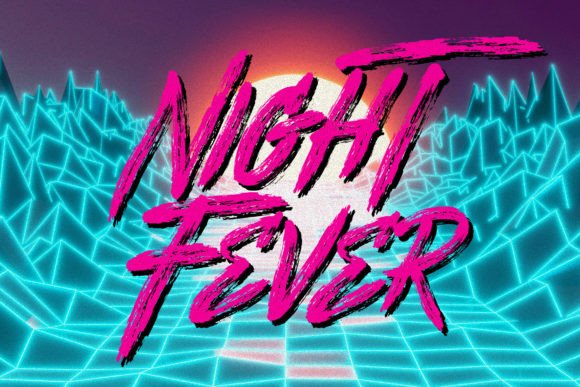
Night Fever Retro: Capturing the Rhythm and Glamour of the Disco Era in Modern Design
In the landscape of typography, fonts do more than just display text; they evoke emotions, set moods, and transport viewers to specific moments in history. Among the vast array of typefaces available to designers today, few genres possess the immediate visceral impact of retro disco fonts. Specifically, the Night Fever style—a category of retro script disco fonts—stands out as a pulsating beacon of the 1970s. It captures the essence of the discotheque scene, transforming ordinary letters into a visual celebration of dance, music, and nightlife. For designers, marketers, and hobbyists, understanding this font style is key to unlocking a specific aesthetic: one of bold energy, nostalgia, and unadulterated fun.
Decoding the Visual Language of Night Fever
At its core, the Night Fever aesthetic is defined by its bold, exaggerated strokes and flamboyant embellishments. Unlike the rigid structure of sans-serifs or the traditional elegance of classic serifs, disco fonts like Night Fever are fluid, kinetic, and unapologetically loud. They mirror the flamboyance and glamour of the era from which they draw their name.
When analyzing the anatomy of this font style, several distinct characteristics emerge:
- Exaggerated Swashes: The terminals of letters often extend into long, sweeping curves, mimicking the movement of a dancer’s arm or the flow of a shimmering outfit.
- Variable Stroke Weight: These fonts often feature high contrast between thick and thin lines, creating a sense of rhythm and depth that feels three-dimensional.
- Retro Script Influence: While "disco," the font retains a script-like quality, suggesting a connection to the hand-lettered signage of 1970s nightclubs and movie posters.
- Shimmering Accents: In digital applications, these fonts are often rendered with metallic gradients or textures to evoke the reflection of a disco ball.
The result is a typeface that does not sit still. Each letter exudes a sense of rhythm and movement, as if grooving to the beat of a funky bassline. It is a visual representation of the "four-on-the-floor" beat that defined the disco era.
The Cultural Significance: More Than Just a Font
To truly appreciate the utility of the Night Fever style, one must understand the cultural context of the 1970s. The disco era was a time of liberation, excess, and sensory overload. The nightlife scene was illuminated by neon lights and dominated by the mirror ball. Fashion was defined by platform shoes, glittering jumpsuits, and vibrant colors.
Typography from this era had to compete with these visual elements. It needed to be loud enough to be heard over the music and bright enough to be seen under the strobe lights. Consequently, disco fonts became synonymous with:
- Escapism: They promised a break from the mundane, offering a ticket to a world of glamour.
- Energy: The dynamic shapes communicated movement and vitality.
- Futurism: At the time, these styles were seen as "space age" and modern, blending organic curves with geometric precision.
Today, using the Night Fever font style is a deliberate act of nostalgia. It taps into a collective memory of a time when music and dance were the primary languages of social connection. It evokes a sense of joy and celebration that transcends generations.
Practical Applications: Where to Use the Night Fever Style
While the font is undeniably specific, its applications in modern design are surprisingly versatile. It is not limited to strictly retro projects; rather, it serves as a powerful tool for grabbing attention and setting a specific tone.
Event Invitations and Promotional Materials
The most natural fit for the Night Fever aesthetic is in event promotion. Whether it is a corporate "Studio 54" themed party, a birthday celebration, or a music festival, this font style immediately communicates the nature of the event. It tells the viewer, "This is a place for fun and dancing." Using this font for party invitations sets the expectation for a high-energy night before the guest even reads the details.
Music and Entertainment Branding
For musicians, particularly those in the funk, soul, or electronic genres, the Night Fever style offers instant brand recognition. Album covers, concert posters, and merchandise (T-shirts, hats) featuring this typography signal a specific sound—groovy, bass-heavy, and danceable. It bridges the gap between vintage appeal and modern music production.
Retro-Themed Design and Packaging
In the world of product packaging, retro design is a perennial trend. Brands often use vintage aesthetics to signal authenticity, craftsmanship, or a "classic" recipe. The Night Fever font works exceptionally well for food and beverage packaging, particularly for items like craft sodas, energy drinks, or snack foods that want to project a fun, youthful image. It adds a touch of whimsy and nostalgia that can make a product stand out on a crowded shelf.
Digital Media and Content Creation
In the age of social media, "thumb-stopping" power is currency. Content creators on platforms like Instagram, TikTok, and YouTube can use disco-style typography in their thumbnails and graphics to attract viewers. The bold, flashy nature of the font cuts through the noise of a busy feed, making it ideal for announcements, sales, or highlight reels.
Integrating Night Fever into Modern Workflows
For designers, incorporating a style as distinct as Night Fever requires a thoughtful approach. Because the font is so expressive, it carries a risk of overwhelming a design if not used correctly. Here are some strategies for integrating it effectively:
- Use as a Display Font: Night Fever is best suited for headlines, logos, and large display text. It is generally not suitable for body copy, as the intricate details can become illegible at small sizes.
- Pair with Simplicity: To let the disco font shine, pair it with a clean, neutral sans-serif font for secondary text. This creates a hierarchy that guides the viewer's eye without causing visual fatigue.
- Color Palette Matters: The font comes alive with the right colors. Think neon pinks, electric blues, golds, and silvers. High-contrast color schemes enhance the "glow" effect associated with the style.
- Context is Key: Ensure the font matches the overall tone of the project. While it can be used ironically or for humor, using it for a serious corporate law firm might send the wrong message.
Clarifying Common Misunderstandings
A common assumption is that retro fonts are "dated" or "unprofessional." However, in the context of creative industries, nostalgia is a powerful currency. The Night Fever style is not a sign of poor taste; it is a strategic choice to evoke specific emotional responses.
Another misunderstanding is that all disco fonts are identical. In reality, there is a spectrum. Some lean more towards the "groovy" psychedelic style of the late 60s, while others, like Night Fever, embrace the sharp, chrome-like futurism of the late 70s. Recognizing these nuances allows designers to select the perfect typeface for the specific sub-genre of retro they wish to emulate.
The Enduring Legacy of Disco Typography
The resurgence of interest in the 1970s aesthetic in recent years proves that the disco era's visual language is timeless. We see it in fashion runways, interior design, and digital interfaces. The Night Fever font style represents more than just a trend; it represents a universal desire for expression, movement, and joy.
For the modern creator, this typography is a tool to inject life into static designs. It transforms a simple flyer into an invitation to dance. It turns a logo into a symbol of vibrancy. In a world that often prioritizes minimalism and starkness, the Night Fever retro script disco font is a welcome burst of energy. It reminds us that design can be fun, flamboyant, and full of rhythm. Whether you are designing for a literal dance floor or simply want to capture that spirit in a digital project, this font style ensures your message is not just seen, but felt.
By understanding its history, its visual mechanics, and its practical applications, you can harness the power of the Night Fever aesthetic to create designs that resonate with audiences looking for a touch of glamour and a whole lot of groove.